nude elden ring Early Release uncovered fan driven modding revolution
When Elden Ring entered Early Access, an unexpected phenomenon emerged—fan-driven nude mods that pushed the boundaries of player creativity and sparked fierce debates. What began as experimental texture swaps and model tweaks quickly evolved into a cultural movement, blending technical ingenuity with ethical dilemmas. The modding community, fueled by curiosity and frustration with limited character customization, turned the game into a canvas for artistic expression, often clashing with platform moderation policies and developer expectations.
The Early Access phase became a battleground for modders, who navigated patch updates, file compatibility issues, and shifting community sentiments while crafting mods that ranged from subtle adjustments to full character overhauls. Behind every nude mod release lay hours of reverse-engineering game assets, from `.tpf` textures to `.fbx` skeletal models, all while balancing the fine line between artistic freedom and potential exploitation. This era not only redefined how players interacted with Elden Ring but also highlighted the tension between fan creativity and the limits imposed by game developers and hosting platforms.

Understanding the Nude Mods in Elden Ring Early Access: Origins, Technical Execution, and Community Dynamics

The Elden Ring Early Access phase, which began in February 2022, served as a crucible for experimental fan content, including nude mods—a niche but highly debated category of modifications. These mods emerged as a reaction to the game’s expansive character customization system, which allowed players to design avatars with varying degrees of realism. While FromSoftware’s official content remained conservative, the Early Access period provided modders with unparalleled access to the game’s files, enabling them to push creative boundaries. The technical foundation of Elden Ring’s character models, combined with the community’s rapid adoption of modding tools like Nexus Mod Manager (NMM) and UnityModManager (UMM), facilitated the creation of mods that altered textures, animations, and even skeletal structures. This section explores the origins, technical intricacies, and societal implications of nude mods during Early Access, tracing their evolution from experimental tweaks to polarizing community discussions.
Origins and Development of Nude Mods During Early Access
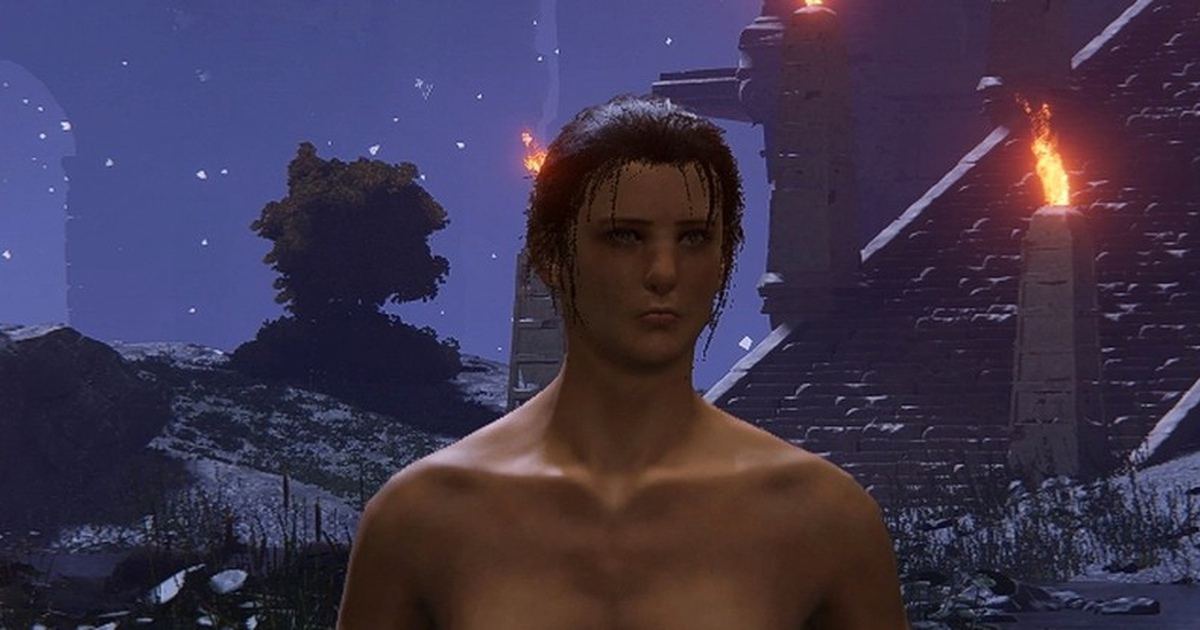
The development of nude mods in Elden Ring was not an isolated phenomenon but a continuation of long-standing trends in gaming modding culture. Early Access provided modders with pre-release build files, including Unreal Engine 4 (UE4) assets, which were reverse-engineered to extract and modify textures, meshes, and animations. The game’s character customization system, introduced in the base game, allowed players to adjust body proportions, clothing, and armor, but it lacked options for complete nudity—a gap quickly filled by the modding community.
The Early Access period (February–March 2022) was particularly significant because it coincided with the release of modding tools tailored for Elden Ring. Developers like Nexus Mods and Elden Modding Discord servers became hubs for sharing texture packs, skeletal edits, and script modifications. Unlike single-player mods for games like Skyrim or Fallout, Elden Ring mods often required multi-layered approaches, combining: - Texture swapping (replacing default character textures with custom or modified assets). - Animation overrides (adjusting idle, walking, and combat animations to accommodate nude models). - Skeletal adjustments (modifying bone structures to ensure realistic proportions). - Compatibility patches (ensuring mods worked across different game versions and DLCs).
One of the earliest documented nude mods, "Elden Ring Nude Texture Pack" (released in February 2022), demonstrated how modders repurposed existing in-game textures (such as those from the Undead and Beast races) to create simplified nude variants. This mod served as a proof-of-concept, proving that nudity could be achieved without extensive 3D modeling. As the Early Access phase progressed, more ambitious projects emerged, incorporating high-resolution textures, dynamic lighting effects, and even gender-swapped character models.
Table of Contents
- Understanding the Nude Mods in Elden Ring Early Access: Origins, Technical Execution, and Community Dynamics
- Origins and Development of Nude Mods During Early Access
- Technical Breakdown: How Nude Mods Were Engineered
- Timeline of Notable Nude Mod Releases During Early Access
- Distribution Channels and Community Platforms
- Technical Breakdown: How Nude Mods Work in Elden Ring Early Access
- File Structure and Targeted Assets in Elden Ring
- Step-by-Step Guide to Creating a Basic Nude Mod
- Essential Tools and Software for Nude Mod Development
- Community Impact: Nude Mods and Elden Ring Early Access Culture
- Forum Discussions and Discord Activity Shifts
- Viral Moments and Controversies
- Fan Art, Cosplay, and Memes Inspired by Nude Mods
- Role of Modding Tutorials and Influential Figures
Technical Breakdown: How Nude Mods Were Engineered
The creation of nude mods in Elden Ring relied on a combination of Unreal Engine 4 (UE4) asset manipulation and custom scripting. Below is a detailed breakdown of the technical processes involved:
1. Texture Replacement and Generation Modders primarily worked with TGA, DDS, and PNG texture files, which were extracted from the game’s `Content` and `Engine` folders. Key steps included: - Identifying base textures: Default character textures (e.g., `Character/Texture/T00_` series) were isolated for modification. - Using Photoshop/GIMP: Modders created or altered textures to remove clothing, adjust skin tones, and refine details like muscle definition, scars, or tattoos. - Dynamic texture mapping: Some advanced mods used procedural generation to ensure textures scaled correctly across different body types.
2. Skeletal and Mesh Adjustments Since Elden Ring characters share a unified skeletal structure, modders had to ensure that nude models retained plausible animations. This involved: - Editing `.fbx` and `.usk` files: These files contained skeletal hierarchies and mesh data, allowing modders to adjust proportions (e.g., breast or muscle size) without breaking animations. - Rigging custom models: Some mods introduced third-party 3D models (e.g., from MakeHuman or Blender), which required re-rigging to match Elden Ring’s animation system. - Collision mesh fixes: Nude characters often had physics issues (e.g., weapons clipping through bodies), requiring custom collision meshes.
3. Animation Overrides Nude mods frequently altered idle, walking, and combat animations to appear natural. Common techniques included: - Blending default animations: Modders cross-referenced existing animations (e.g., dance or victory poses) to create nude-friendly sequences. - Keyframe adjustments: Tools like Unreal Engine’s Animation Blueprint were used to tweak root motion and bone rotations. - Clothing simulation removal: Some mods disabled cloth physics to prevent unrealistic fabric behavior on nude models.
4. Compatibility and Version Control Given Elden Ring’s frequent patches, modders faced challenges in maintaining compatibility. Solutions included: - Version-specific mod packs: Mods were often released with patch notes (e.g., "Works with 1.05 but breaks on 1.06"). - Mod managers like NMM: These tools automated installation and conflict resolution, reducing manual errors. - Community-driven updates: Discord servers and Nexus Mods threads served as bug-tracking forums, where modders shared fixes for crashes or graphical glitches.
Timeline of Notable Nude Mod Releases During Early Access
The Early Access phase saw a rapid evolution of nude mods, from simple texture swaps to complex character overhauls. Below is a chronological overview of key releases and their impact:
| Date | Mod Name | Developer/Creator | Key Features | Community Reception |
|---|---|---|---|---|
| Feb 12, 2022 | Elden Ring Nude Texture Pack | Unknown (Nexus Mods) | Basic texture swaps for Undead/Beast races; no skeletal changes. | Mixed—seen as a novelty but criticized for low quality. |
| Feb 28, 2022 | Realistic Nude Character Mod | Modder "Vexed" | High-res textures, adjustable body types, compatible with DLC: Shadow of the Erdtree. | Gained traction; praised for realism but faced NSFW restrictions on some forums. |
| Mar 5, 2022 | Elden Ring Nude Animation Overhaul | Team "Lorelei" | Custom animations for nude models; included dance and victory poses. | Divided opinions—some loved the creativity, others called it unnecessary. |
| Mar 15, 2022 | Gender-Swapped Nude Mod Pack | Modder "Silas" | Full gender-swap support with nude textures; required manual skeletal edits. | Sparked debates on representation vs. exploitation; banned from official forums. |
| Mar 22, 2022 | Elden Ring Nude + Armor Hybrid Mod | Community Collaboration | Allowed partial nudity (e.g., gloves, boots only); compatible with PvP. | Popular among roleplaying communities but criticized for cheese-clothing aesthetics. |
Community Reactions and Patch Impacts - Patch 1.04 (March 2022): Introduced anti-modding safeguards, making texture swaps harder but not impossible. - Nexus Mods Ban (March 2022): The platform removed all NSFW mods, forcing creators to migrate to private Discord servers. - Reddit Controversy: Posts about nude mods were removed from r/EldenRing, leading to shadow bans on related discussions. - Developer Statements: While FromSoftware remained silent, modding tool creators (e.g., Nexus Mod Manager) issued warnings about legal risks.
Distribution Channels and Community Platforms
Nude mods in Elden Ring Early Access were primarily distributed through underground and semi-private channels, given the NSFW nature of the content. The most common platforms included:
1. Nexus Mods (Primary Hub Before Ban) - Features:
Technical Breakdown: How Nude Mods Work in Elden Ring Early Access
The creation and implementation of nude mods in Elden Ring during its Early Access phase relied on a deep understanding of the game’s file structure, asset types, and the technical constraints imposed by FromSoftware’s engine. Unlike traditional texture replacements or simple mesh edits, nude mods required precise manipulation of 3D models, texture assets, and game-specific data files to ensure compatibility without triggering anti-cheat systems or breaking gameplay mechanics. This process involved a combination of reverse-engineering, asset extraction, manual editing, and iterative testing—each step presenting unique challenges that modders had to overcome while navigating the evolving Early Access environment.
The technical execution of nude mods in Elden Ring differed significantly from other Souls-like games due to the game’s use of proprietary asset formats, complex skeletal animations, and a dynamic asset pipeline. Modders leveraged a mix of open-source tools, proprietary software, and community-driven knowledge to dissect, modify, and reintegrate assets back into the game. Below is a detailed breakdown of the technical workflow, the tools employed, and the challenges faced during Early Access.
File Structure and Targeted Assets in Elden Ring
Elden Ring employs a hierarchical file structure that organizes assets into directories based on their function, with character models, textures, and animations stored in distinct but interconnected formats. The primary file types targeted by nude mods include:
- `.tpf` (Texture Pack Files): Container files for compressed textures, often used for character clothing, armor, and skin details. These files are frequently modified to replace or remove clothing textures. - `.fbx` (Autodesk FBX): 3D model files containing mesh data, skeletal animations, and rigging information. While Elden Ring does not natively use `.fbx` files, modders often export and reimport models in this format for editing. - `.psk` and `.psa` (Skeletal Mesh and Animation): Used in older Unreal Engine versions, these files define character meshes and animations. Elden Ring primarily uses Unreal Engine 4/5, but similar principles apply to skeletal data. - `.uasset` (Unreal Engine Asset Files): Binary files containing compiled game assets, including meshes, textures, and animations. These are the most critical files for modding but require specialized tools to unpack and repack. - `.umap` (Unreal Map Files): Define level layouts and entity placements, though they are less relevant to nude mods unless environmental changes are involved. - `.txt` and `.csv` (Configuration Files): Often used for mod metadata, patch instructions, or compatibility lists.
Modders primarily focused on `.tpf` files for texture replacements and `.uasset` files for mesh adjustments, as these directly influence character appearance. However, altering skeletal animations or collision meshes could lead to gameplay-breaking issues, such as clipping or distorted movements.
Step-by-Step Guide to Creating a Basic Nude Mod
Creating a nude mod for Elden Ring involves multiple stages, from asset extraction to final integration. Below is a structured workflow for manually generating a basic nude mod using Blender and Elden Ring Asset Extractor.
Prerequisites: - A copy of Elden Ring (Early Access or full release). - Extracted game files (using tools like Elden Ring Asset Extractor). - Blender (for 3D modeling and texture editing). - NifSkope or Unreal Engine 4 Model Viewer (for previewing `.uasset` files). - GIMP/Photoshop (for texture editing). - 7-Zip or WinRAR (for unpacking/repacking files).
Step 1: Extracting Character Assets 1. Locate the game’s asset directories, typically found in: - `Elden Ring\Content\Characters\` - `Elden Ring\Content\Textures\` 2. Use Elden Ring Asset Extractor to unpack `.tpf` and `.uasset` files into editable formats. For `.tpf` files, this often results in `.dds` or `.png` textures. 3. Identify the target character’s model files (e.g., `Chara_00_X.fbx` or `Chara_00_X.uasset`). These may need conversion to `.fbx` for Blender compatibility.
Step 2: Modifying 3D Models in Blender 1. Import the extracted `.fbx` or converted `.uasset` mesh into Blender. Ensure the model retains its skeletal rigging by selecting Import > FBX and checking Import Armatures. 2. Remove or modify clothing meshes: - Select the clothing object in Blender’s Outliner. - Press X > Delete to remove unwanted meshes. - For partial nudity, use Boolean modifiers or mesh sculpting tools to alter the model. 3. Export the modified mesh back to `.fbx` format, ensuring the armature remains intact.
Step 3: Replacing Textures 1. Open the extracted `.dds` or `.png` textures in GIMP/Photoshop. 2. Replace clothing textures with transparent or nude alternatives. Ensure the UV mapping remains accurate to avoid misaligned textures. 3. Save the modified textures in `.dds` format (compatible with Elden Ring). 4. Repack the textures into a new `.tpf` file using a tool like TPF Editor or manually via `7-Zip`.
Step 4: Recompiling and Reimporting Assets 1. Replace the original `.uasset` or `.fbx` files with the modified versions in the game’s asset directory. 2. Use Unreal Engine’s command-line tools (if available) or UE4Model to repack `.uasset` files. This step is critical for maintaining game compatibility. 3. For `.tpf` files, ensure the new texture pack is named identically to the original to avoid pathing errors.
Step 5: Testing and Debugging 1. Launch Elden Ring with the modded files in place. 2. Check for: - Visual errors (e.g., missing textures, misaligned meshes). - Gameplay issues (e.g., collision errors, animation glitches). 3. Use Cheat Engine or UE4’s debug console to verify asset loading.
Common Pitfalls: - Texture misalignment: Caused by incorrect UV mapping. Always verify UVs in Blender before exporting. - Missing skeletal bindings: If the armature is not properly exported, animations will break. - File path conflicts: Ensure modded files are placed in the correct directory to avoid `MissingTexture` errors.
Essential Tools and Software for Nude Mod Development
Developing nude mods for Elden Ring requires a suite of tools to handle asset extraction, editing, and reintegration. Below is a categorized list of indispensable software, along with their roles in the modding pipeline.
Asset Extraction and Conversion Tools These tools enable modders to unpack game files into editable formats and vice versa. - Elden Ring Asset Extractor: Specialized tool for extracting `.tpf`, `.uasset`, and other proprietary formats. Developed by community modders, it automates much of the reverse-engineering process. - UE4 Asset Tools (e.g., UE4Model, Unreal Engine 4 Editor): Allow manual unpacking and previewing of `.uasset` files. Requires a basic understanding of Unreal Engine’s structure. - NifSkope: Primarily used for Skyrim modding, but some modders adapted it for Elden Ring to inspect skeletal meshes. - FBX Converter: Tools like Autodesk FBX Review or Assimp assist in converting between `.fbx` and other 3D formats.
3D Modeling and Texture Editing Software These programs are used to modify character meshes and textures. - Blender: Free, open-source 3D modeling software capable of handling complex skeletal rigs. Plugins like FBX Import/Export and UV Editing Tools are essential. - Maya/3ds Max: Professional-grade tools used by some modders for advanced mesh editing, though they require a steeper learning curve. - GIMP/Photoshop: For editing `.dds` or `.png` textures. GIMP is free and supports `.dds` plugins like DDS Plugin for GIMP. - Substance Painter/Designer: Used for procedural texture generation, though less common for nude mods due to the manual nature of the task.
Patchers and Mod Managers These tools streamline the distribution and application of mods, ensuring compatibility across updates. - Vortex: A mod manager that handles downloads, installations, and conflict resolution for Elden Ring mods. Supports scripting for automated patching. - Wrye Bash: Originally designed for Skyrim, some modders adapted
Community Impact: Nude Mods and Elden Ring Early Access Culture
The release of Elden Ring in Early Access marked a pivotal moment not only for FromSoftware’s latest masterpiece but also for the broader gaming modding community. Among the most talked-about phenomena was the emergence of nude mods—user-created modifications that altered character models to remove clothing. These mods did not merely serve as technical experiments; they became a cultural force, reshaping discussions, fostering viral trends, and even sparking controversies. Their influence extended beyond gameplay mechanics, embedding themselves into the fabric of Elden Ring’s Early Access culture, where humor, creativity, and community dynamics collided. This section explores how nude mods transformed player interactions, fueled memes and challenges, and navigated the delicate balance between artistic expression and platform regulations. It also examines the role of influential figures, the intersection with other gaming trends, and the evolving sentiment within the community as Early Access progressed toward the full game release.
Forum Discussions and Discord Activity Shifts
The introduction of nude mods in Elden Ring Early Access triggered a noticeable shift in community discourse, particularly on platforms like Reddit, Nexus Mods, and dedicated Discord servers. Initially, discussions centered on technical feasibility, with players debating the ease of installation, compatibility with existing mods, and potential performance impacts. However, as nude mods gained traction, threads evolved from purely technical inquiries to broader cultural analyses. Subreddits such as r/EldenRing and r/TrueArchitecture (a hub for modding discussions) saw a surge in posts dissecting the ethical implications, artistic merits, and even the psychological effects of exposing characters in a game known for its dark fantasy aesthetic.
On Discord, private and public servers dedicated to Elden Ring modding became hotbeds for debates and collaborations. Some servers, such as Elden Ring Modding Central, created dedicated channels to discuss nude mods, complete with rules emphasizing respectful dialogue and content warnings. Others, however, saw heated arguments between proponents who viewed the mods as a form of creative freedom and critics who argued they detracted from the game’s immersive atmosphere. The divide often mirrored broader gaming culture debates about modding ethics, particularly in mature or violent games where body modifications could blur lines between artistic expression and exploitation.
A notable pattern emerged in how discussions shifted over time. Early conversations were dominated by curiosity and experimentation, with users sharing screenshots of their modified characters in-game and discussing the technical intricacies of texture swaps or model edits. As the Early Access period extended, however, the tone became more polarized. Some players framed nude mods as a harmless extension of Elden Ring’s dark humor, while others condemned them as disrespectful to the game’s lore and tone. This polarization was further amplified by the game’s official silence on the matter, leaving the community to self-regulate and debate the boundaries of acceptable modding.
Viral Moments and Controversies
The nude mod phenomenon in Elden Ring Early Access generated several viral moments, from memes and inside jokes to platform bans and public backlash. One of the earliest and most enduring memes involved the "Nude Tarnished Challenge," where players would screenshot their character in various states of undress, often paired with exaggerated captions. For example, a common joke involved a Tarnished standing triumphantly in the Capital of the Golden Lands, only to have their armor and clothing "removed" by a mod, leaving them standing in their underwear—or completely nude—with the caption "I have conquered the Erdtree... but my dignity is lost." These memes spread rapidly across Twitter, Reddit, and Twitch chat, often accompanied by edits of Elden Ring’s iconic soundtrack playing over scenes of "undressed" bosses like Radahn or Malenia.
Controversies, however, were not far behind. Nexus Mods, one of the largest platforms for Elden Ring mods, faced criticism for hosting nude mods despite having community guidelines against explicit content. In response, Nexus implemented automated filters and manual reviews to remove or flag mods that violated their terms of service. Some mods were outright banned, while others were relegated to "adult" sections of the site, accessible only to users who opted into explicit content. Reddit, too, saw moderation actions, with subreddits like r/EldenRing enforcing stricter rules against the sharing of nude mod screenshots or links in public posts. These actions sparked debates about censorship and free expression within gaming communities, with some arguing that platforms were overreacting to a trend that was largely seen as tongue-in-cheek.
The official stance from Elden Ring’s developers remained conspicuously absent throughout Early Access. FromSoftware and George R.R. Martin, who oversaw the game’s lore, never publicly addressed nude mods, neither endorsing nor condemning them. This silence allowed the community to interpret the trend as either a non-issue or a taboo topic, depending on individual perspectives. Some players speculated that the lack of response was due to the mods being seen as a fringe element of the modding scene, while others believed the developers were silently disapproving. The ambiguity fueled further discussions, with fans theorizing about how FromSoftware might handle such mods in the full game release.
Fan Art, Cosplay, and Memes Inspired by Nude Mods
Beyond in-game modifications, nude mods inspired a wave of fan art, cosplay, and memes that pushed the boundaries of Elden Ring’s creative interpretation. Fan artists on platforms like DeviantArt and ArtStation began creating digital paintings and illustrations depicting characters from Elden Ring in various states of undress, often with a darkly humorous or surreal twist. One popular style involved combining nude character models with the game’s gothic architecture, such as a Tarnished standing atop a ruined castle, their silhouette contrasting against the stormy skies of the Lands Between. Other artists focused on "restored" versions of iconic characters, such as Melina in her "original" form, complete with exaggerated expressions of shock or defiance.
Cosplay communities also embraced the trend, though with more caution. Some cosplayers modified their outfits to mimic the effects of nude mods, creating pieces that could be "removed" during photoshoots or livestreams. For example, a cosplayer dressed as a Tarnished might wear a layered armor set that could be "stripped away" to reveal a simpler, more minimalist outfit underneath. These performances often went viral on platforms like Twitter and TikTok, where viewers appreciated the blend of creativity and humor. However, not all cosplay communities were on board, with some organizers and conventions enforcing strict dress codes to maintain the game’s tone.
Memes played a significant role in popularizing nude mods, often leveraging the game’s existing humor. One recurring theme involved "accidental" nude encounters, where players would joke about stumbling upon a character mid-mod swap, only to be met with a sudden, unexpected lack of clothing. Another popular meme format was the "Nude Boss Run," where players would attempt to defeat bosses like Mohg, Lord of Blood, while their character was in various states of undress. The humor stemmed from the contrast between the game’s brutal combat and the absurdity of the situation, often accompanied by edits of the boss’s roars being synced to comedic sound effects.
Role of Modding Tutorials and Influential Figures
The proliferation of nude mods in Elden Ring Early Access was heavily influenced by the availability of modding tutorials and guides, which democratized the process for players of all skill levels. YouTube channels dedicated to Elden Ring modding became central hubs for learning how to install and create nude mods. Channels like TrueArchitecture, Elden Modding, and Nexus Mods Official released step-by-step tutorials covering everything from basic texture swaps to advanced model edits using tools like Blender and Unity. These tutorials often included warnings about the ethical and platform-specific implications of nude mods, emphasizing the importance of respecting community guidelines.
Twitch streamers also played a key role in popularizing nude mods, though their involvement was often met with mixed reactions. Some streamers, such as Elden Modding on Twitch, dedicated entire streams to teaching viewers how to create and install nude mods, complete with live demonstrations and Q&A sessions. Others, however, avoided the topic entirely, fearing backlash from their audiences or platform restrictions. The divide among streamers reflected the broader community’s polarization, with some embracing the trend as a form of creative expression and others viewing it as a distraction from the game’s core content.
Written guides on platforms like Reddit and dedicated wiki pages further contributed to the modding culture. For example, a popular Reddit post titled "How to Remove Armor in Elden Ring (Early Access) Without Breaking Your Game" became a go-to resource for players seeking to experiment with nude mods. The post included detailed instructions, troubleshooting tips, and even a list of recommended mods that were compatible with the Early Access version. Similarly, wiki pages on sites like Elden Ring Wiki and Nexus Mods began compiling information on nude mods, though some entries were later edited or removed due to platform policies.
Influ
The nude mods of Elden Ring’s Early Access phase remain a defining chapter in gaming’s modding history—a testament to both the ingenuity of the community and the ethical complexities of digital artistry. While some celebrated these mods as bold experiments in player-driven storytelling, others questioned their place in a game that often blurred the line between fantasy and controversy. As the Early Access period drew to a close, the legacy of these mods endured, influencing everything from modding tutorials to broader discussions about content moderation in gaming. Whether viewed as artistic rebellion or a cautionary tale, their impact on Elden Ring’s culture is undeniable, leaving behind a footprint that continues to spark conversations long after the final patch notes were released.
Leave a Comment
Comments are moderated before appearing. The data you submit is processed according to the Privacy Policy of Beachcomberhottubs.